
A bedroom feels warmer and calmer when you fix four things in order: the light, the bedding, the colors, and the amount of visual clutter in sight from the pillow. Most of that can be done with a few hundred dollars and no tools, and the biggest single change is usually swapping cool, bright bulbs for warm, dimmable ones.
Warmth and calm are related but not identical. Warmth is mostly about light color, soft materials, and a palette with yellow, red, or brown undertones. Calm is mostly about reducing what your eyes have to process. A room can be warm and still feel busy, so the steps below handle both.
Start with the light, because it changes everything else
Bedroom light should be low and warm after sunset. Look for bulbs labeled 2700K (kelvin) or lower. That is the “warm white” range, similar to the glow of an old incandescent bulb. Bulbs at 4000K to 5000K, sold as “cool white” or “daylight,” make a bedroom look like an office. The package lists the kelvin number, so check the box rather than the name.
- Ceiling fixture: Keep it for cleaning and dressing, and put it on a dimmer if you can. Swapping a wall switch for a dimmer involves household wiring, so have a licensed electrician do it. A plug-in smart bulb or a lamp with its own dimmer avoids that step entirely.
- Bedside lamps: A pair of table lamps, one on each side, gives soft pools of light at a comfortable height. The bottom of the shade should sit roughly at eye level when you are sitting up in bed, so you are not looking directly at the bulb.
- Bulb brightness: For a bedside lamp, about 400 to 600 lumens is typically plenty. Much higher tends to feel harsh at night.
- Dimmer compatibility: Use bulbs marked “dimmable” and pair them with a dimmer rated for LEDs. A mismatch causes flicker or buzzing.
If you want more detail on layering lamps, the guide to lighting that makes a home feel warm at night goes through placement and bulb choice.
Build the bed in layers
The bed is the largest visual surface in the room, so it sets the mood. A cozy bed has three or four layers with different textures, not a pile of pillows.
- Base layer: Fitted sheet and flat sheet. Cotton percale feels crisp and cool. Cotton sateen feels smoother and a little warmer. Linen is breathable and gets softer with washing. Flannel is the warmest choice for cold months.
- Middle layer: A duvet or comforter in a plain or softly textured cover. Washed cotton, linen, or a waffle weave all look relaxed.
- Top layer: A throw blanket folded across the foot of the bed. Chunky knit, wool blend, or quilted cotton adds depth.
- Pillows: Two sleeping pillows, two standard shams, and one or two accent pillows are enough for a queen bed. More than five or six pillows in total turns into something you move off the bed every night.
Fabric that feels soft in your hands usually feels soft at night, so touch before you buy when you can, and judge by fiber and weave more than by thread-count claims. Wash everything on the care label’s schedule. Fresh, clean bedding does more for the feeling of a room than any decorative item.

Choose a quieter color palette
Calm bedrooms usually use a narrow palette with low contrast between walls, bedding, and furniture. Aim for three main colors: a dominant wall or bedding tone, a secondary tone, and an accent used sparingly.
Colors that tend to read warm and quiet:
- Warm whites with a cream or soft yellow undertone
- Greige, mushroom, and taupe
- Muted clay, sand, and soft terracotta
- Dusty sage and olive green
- Soft oatmeal and camel in textiles
Very bright whites, stark black-and-white contrast, and saturated primary colors tend to keep your eyes working. Test paint with a large sample, roughly 2 feet by 2 feet, on two walls and look at it in morning and evening light for a few days before committing. A gallon of interior paint often covers roughly 350 to 400 square feet per coat, so a standard bedroom usually takes one to two gallons for two coats. Prices vary a lot by brand and region.
If your home was built before 1978, assume old layers of paint may contain lead until tested. The EPA advises against dry sanding or scraping painted surfaces in these homes, because disturbing the paint is where the risk comes from. Hire a lead-safe certified professional for any prep that involves sanding or removal. For more on undertones, see the guide to colors that make a home feel warmer without being dark.
Add softness underfoot and at the window
Hard surfaces make a room feel cold, both literally and visually. Two additions do most of the work.
A rug that sits under the bed
A rug should extend at least 18 to 24 inches beyond the sides and foot of the bed so your feet land on it when you stand. For a queen bed that usually means an 8 by 10 foot rug. For a king, 9 by 12 is common. If a large rug is out of budget, two runners along the sides are an option, though they look less cohesive. Wool and wool blends are soft and durable. Add a rug pad, which keeps the rug from sliding and adds cushion, typically for $20 to $60.
Curtains that frame the window
Hang the rod 4 to 6 inches above the window frame, or close to the ceiling, and extend it 8 to 12 inches past each side so the curtains stack off the glass. Floor-length panels in linen, cotton, or a heavier weave soften hard corners and frame the window. If light wakes you early, use a lined or blackout panel. A sheer layer behind the main curtain gives daytime softness. Use a ladder only if it is stable and on level ground, and have someone hold it when drilling into the wall above head height.
Reduce what the eye has to process
Calm comes from fewer visible objects. The room does not need to be bare. It needs to look like it has places for things.
Start by clearing the view from the bed. Whatever you see when lying down counts the most: the top of the dresser, a chair piled with clothes, a desk with papers, cables on the nightstand. Move these first.
- Put a lidded basket or a tray on each nightstand so small items have a defined home.
- Use a hamper that you actually like looking at, ideally with a lid.
- Limit surface decor to a small group on the dresser and one or two items on each nightstand.
- Keep work materials out of sight. A laptop and papers in a bedroom make it harder to relax.
- Hide cords with a cord cover or clips behind furniture.
Nightstands are easy to overload. A lamp, a book, a glass of water, and one small dish is a complete setup.
Place the furniture so the room feels settled
Position the bed against a solid wall, ideally with a headboard, so you feel anchored. Avoid placing it directly in line with the door if you can, because you will notice every movement in the doorway. Leave about 24 to 30 inches of walking space on each side. A bed pushed into a corner with no side access is hard to make and tends to feel cramped.
A headboard adds softness and visual weight. Upholstered headboards in linen-look or bouclé-style fabric look warm. A simple wood headboard works too. If you do not have one, a large piece of art or a wide framed mirror hung above the bed gives the same anchoring effect. Hang anything heavy above a bed into wall studs or with anchors rated for the weight, since a falling frame is a real hazard.
Use texture, plants, and scent sparingly
Once the main elements are right, a few small additions complete the room. One or two natural materials, such as a wood nightstand, a woven basket, or a ceramic lamp base, give contrast without noise. The guide to textures that make a home feel cozier explains how to mix materials without overdoing it.
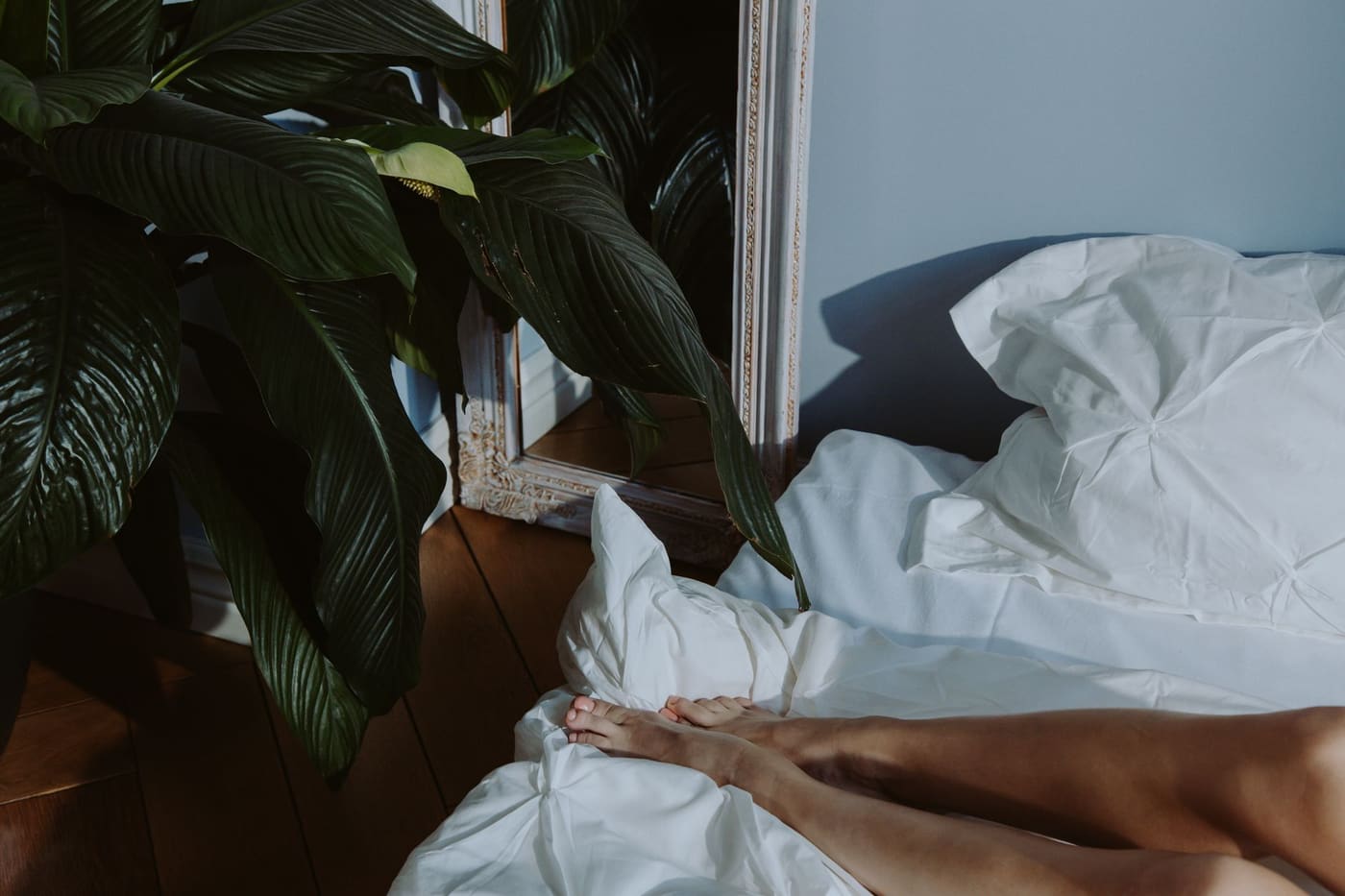
A plant that tolerates low light, like a snake plant or pothos, adds living color, though both are listed as toxic to cats and dogs if chewed, so check any plant against a pet-safety list first.
If you would rather work in short sessions, the list of small decor changes that make a bedroom feel more restful works well as a weekend checklist.
Rough costs and a sensible order
| Change | Typical cost | Effort |
|---|---|---|
| Warm dimmable bulbs | $10 to $30 | 10 minutes |
| Declutter and add baskets | $20 to $60 | 1 to 2 hours |
| Duvet cover and throw | $60 to $200 | 30 minutes |
| Bedside lamps | $50 to $150 per pair | 30 minutes |
| Curtains and rod | $60 to $250 | 1 to 2 hours |
| Large rug and pad | $150 to $600 | 30 minutes |
| Repaint | $50 to $150 in supplies | 1 weekend |
Do the cheap items first, because bulbs and decluttering often deliver most of the improvement. Paint last, since you will choose a better color once the bedding and lighting are in place.
To plan the lamps for the room, try the cozy lighting layers planner.
Where this comes from
This guide draws on the EPA’s guidance on lead-safe work in homes built before 1978 (as summarized by state health departments) and the National Fire Protection Association’s candle safety advice, as summarized by fire agencies. Sizing and layout figures (rug and curtain dimensions, walkway widths) are common interior-design rules of thumb, not tested results. Prices, paint coverage and product specifications change, so check them at the source or the store before you buy.