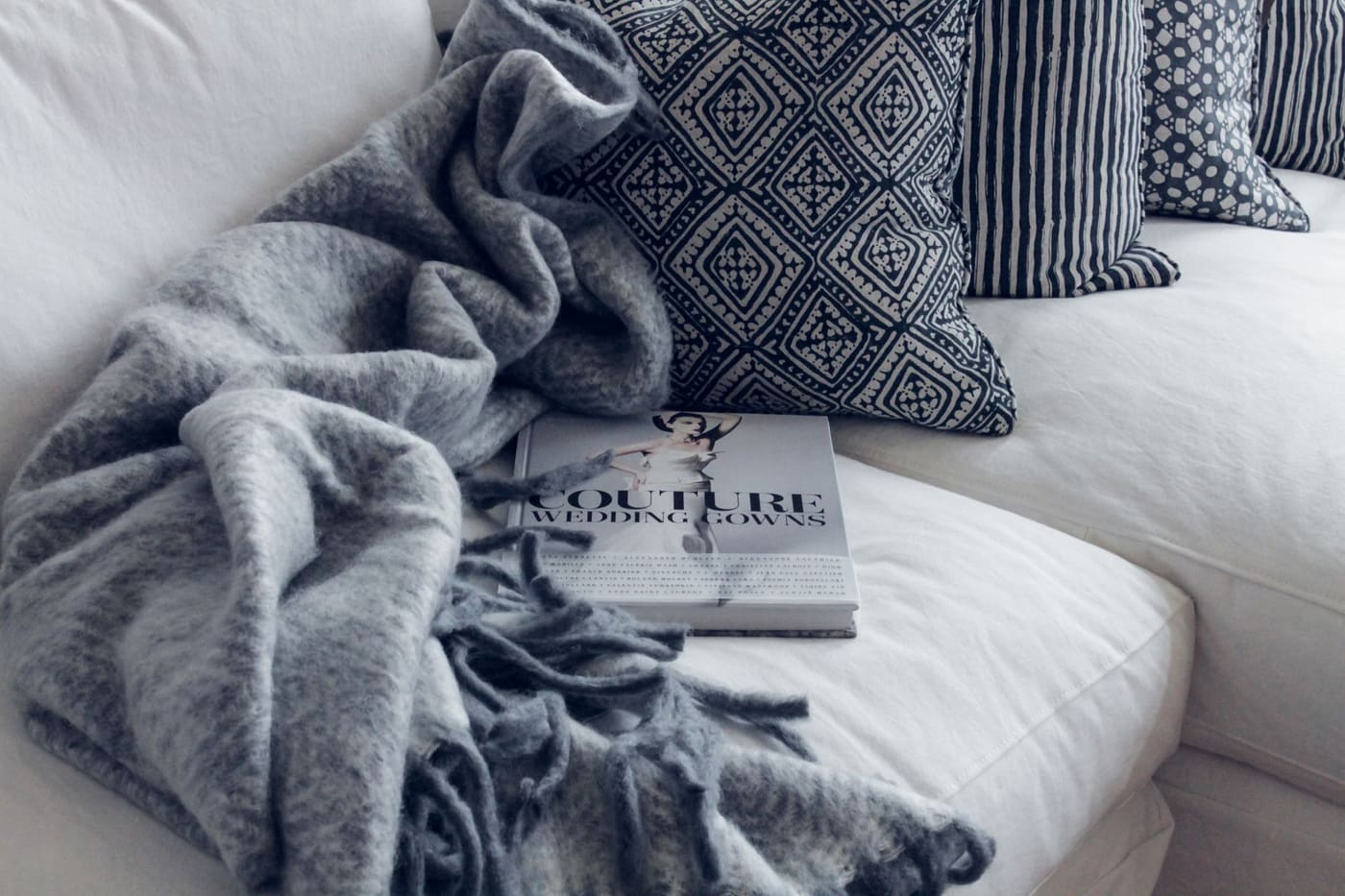
The textures that make a home feel cozier are soft, nubby, and slightly irregular: chunky knits, wool, bouclé, linen, cotton flannel, velvet, sheepskin, woven natural fibers like jute and rattan, and warm wood with visible grain. A room feels cozy when you can see and imagine touching several different surfaces, and when hard, shiny, or perfectly smooth materials are balanced by softer ones.
Texture works because it adds depth without adding objects. A plain sofa with a knit throw and a linen pillow has more visual interest than the same sofa with ten small accessories. That is why texture is the best tool for making a room warm without cluttering it.
Start with soft textiles you touch every day
The fastest cozy gains come from fabrics in contact with your body: the sofa, the bed, and the chairs you sit in. Prioritize those before decor you only look at.
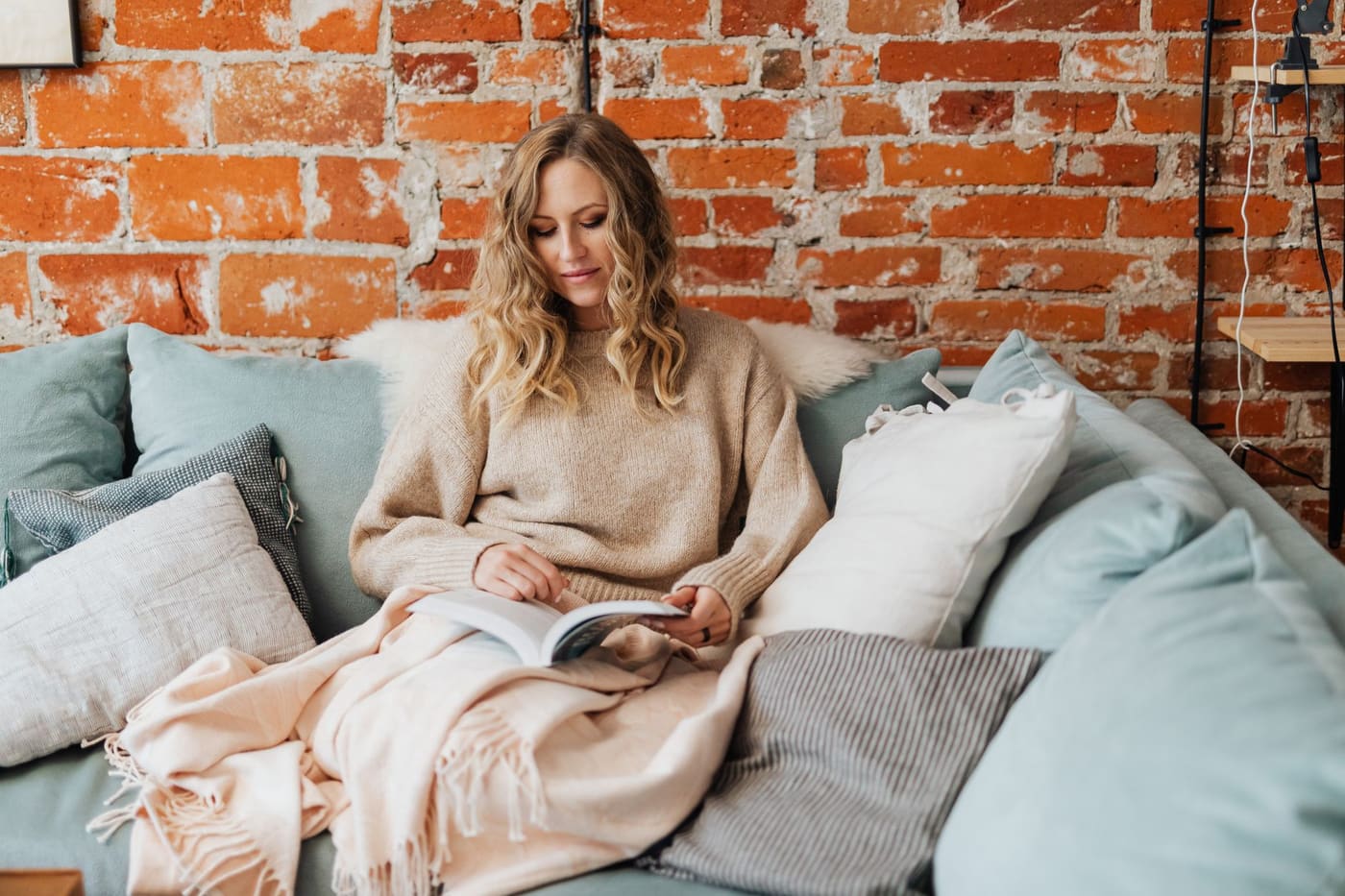
- Throws: A chunky knit, wool blend, or faux-shearling throw adds immediate warmth. A throw about 50 by 60 inches suits a sofa, and a larger one around 60 by 80 inches works for a bed.
- Pillows: Mix two or three fabrics, such as linen, bouclé, and cotton velvet. Cover sizes of 18 to 22 inches are common for sofas.
- Bedding: Flannel and brushed cotton feel warm in winter, while washed linen and cotton percale feel relaxed and breathable.
- Seat cushions: A cushion or slipcover on a hard wood or metal chair softens it.
Fabric content affects feel and care. Wool is warm and resilient but may need gentle washing or dry cleaning. Cotton is easy to wash. Linen softens with age and wrinkles naturally. Polyester blends are inexpensive and durable, though some feel less breathable. Check care labels before buying, and wash before use when the label says so.
Mix materials with different surface qualities
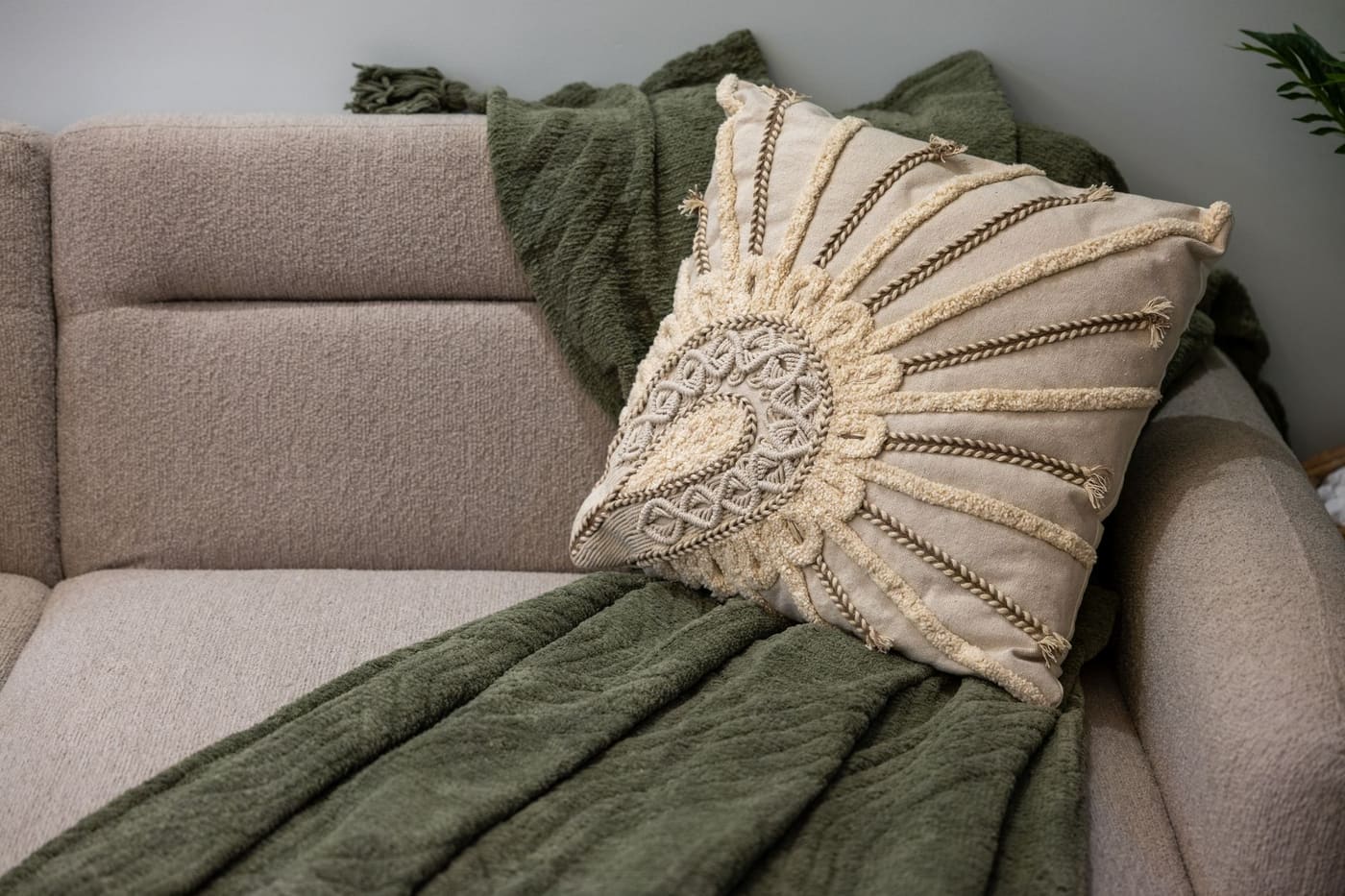
The trick to texture is contrast. Put a smooth material next to a rough one, a matte next to a slight sheen, a heavy weave next to a fine one.
| Pair | Why it works |
|---|---|
| Smooth leather sofa with a chunky knit throw | Cool and sleek against soft and bulky |
| Linen curtains with a velvet pillow | Matte and slubby against a soft sheen |
| Glossy ceramic lamp base with a woven shade | Smooth and hard against fibrous |
| Wood coffee table with a jute rug | Polished grain against rough weave |
| Cotton bedding with a wool blanket | Crisp against fuzzy |
A rule of thumb is to include at least three distinct textures in a room, and no more than five or six main ones. If everything is soft, the room can look shapeless. If everything is smooth and polished, it feels cold. Aim for balance, with one or two dominant materials and a couple of supporting ones.
Use natural fibers and woven materials
Natural materials bring a tactile, handmade look that makes a room feel grounded. They also tend to be forgiving of wear.
- Jute and sisal rugs: Coarse and durable, good for living areas and entries. They can feel rough underfoot, so layer a softer small rug on top where you sit.
- Wool rugs: Soft, warm, and resilient. A good choice in bedrooms and living rooms.
- Rattan, cane, and wicker: Add airy structure to chairs, headboards, and cabinet fronts.
- Seagrass and rush baskets: Hold throws, magazines, and toys while adding texture.
- Cotton and linen weaves: Slubby, nubby, and open weave textiles read as relaxed.
If you have allergies, choose rugs and textiles you can clean easily. Wool rugs typically need regular vacuuming and occasional professional cleaning, and many jute rugs should not be soaked, since moisture can warp them or cause mildew.
Pay attention to wood, stone, and metal
Hard materials contribute texture and warmth too, and the choices matter.
Wood is the largest contributor. Warm tones such as oak, walnut, and cherry, with visible grain, make rooms feel warm. A raw or matte finish usually reads warmer than a high-gloss one. Mixing two wood tones works if they share undertones, so do not worry about matching exactly. If one is yellow and one is reddish, add a rug or textile that includes both colors to link them.
Metals have temperature. Brass, bronze, and copper read warm. Chrome and polished nickel read cooler. A mix of one warm metal and a black or aged metal looks intentional. Stone and ceramic add cool, heavy contrast, so use them in small doses, like a stoneware lamp base or a marble tray, to balance soft fabrics. Glass and mirrors reflect light and can cool a room, so keep them limited to a few well-placed pieces.
For help with the color side of warmth, see the guide to colors that make a home feel warmer without being dark.
Layer from the floor up
A reliable way to build texture is to work in layers, starting at the floor.
- Floor: Start with a rug large enough that the front legs of your furniture sit on it. In a living room, 8 by 10 feet is a common size. On hardwood, add a rug pad so it does not slide.
- Furniture: Choose at least one soft upholstered piece, such as a sofa or chair, and one hard piece, such as a wood table.
- Textiles on furniture: Add a throw and pillows in varied fabrics.
- Windows: Hang curtains that reach the floor, in linen, cotton, or a thicker weave. Mount the rod a few inches above the window frame to add height.
- Walls and shelves: Add a woven wall hanging, framed art with texture, or a wood shelf with ceramics.
- Accents: A plant, a woven basket, a candle in a ceramic holder.
Stop when each layer is in, and if the room still feels flat afterward, the guide on why a room still does not feel cozy even after you decorate it covers the non-texture causes. Adding a seventh and eighth layer is usually where a room tips into clutter.
Match texture weight to the size of the room
Heavy, chunky textures take up visual space. In a small room, they can make it feel crowded. A few adjustments help.
- In small rooms, use a smaller number of larger textiles, such as one big rug and one big throw, instead of many small ones.
- Use lighter colors in chunky textures so they do not feel heavy.
- Choose finer weaves, like linen and fine knits, for curtains and upholstery.
- In large rooms, use bolder textures and larger patterns to avoid a flat feel.
Scale also applies to pattern. A big bouclé chair looks fine in a living room but can overwhelm a small bedroom. If a room already feels cluttered, the guide to making a living room cozier without cluttering it shows how to edit objects while adding softness.
Keep textiles clean and safe
Cozy textures only feel good when they are clean. Dust and pet hair build in nubby fabrics.
- Vacuum rugs and upholstery weekly, and rotate rugs a couple of times a year to even out wear.
- Wash throws and pillow covers according to care labels. Many can go in a gentle cycle, and some need air drying.
- Use a lint roller or rubber glove for hair on bouclé and knit.
- Spot-clean spills immediately by blotting, not rubbing.
- Keep candles, heaters, and fireplaces well away from throws, curtains, and rugs. Use heaters with tip-over shutoff and plug them directly into the wall, not into extension cords, as home-safety agencies advise.
- Keep all fabrics, including synthetic fleece, away from open flames.
If your fabrics have an odor from mildew, do not just mask it. Dry them fully in a well-ventilated area, and if you suspect mold on walls or in large patches, do not scrub it yourself in a heavy case. Hire a professional when mold covers a large area or comes with a water leak.
Where this comes from
This guide rests on common interior-design practice (contrast, layering and scale) and general home-safety advice from fire-safety agencies about keeping heat sources and flames away from fabric. Texture combinations are styling judgment, not tested results. Care steps follow the care labels on the product. Sizes, costs and product specifications vary, so check them at the source or the store.