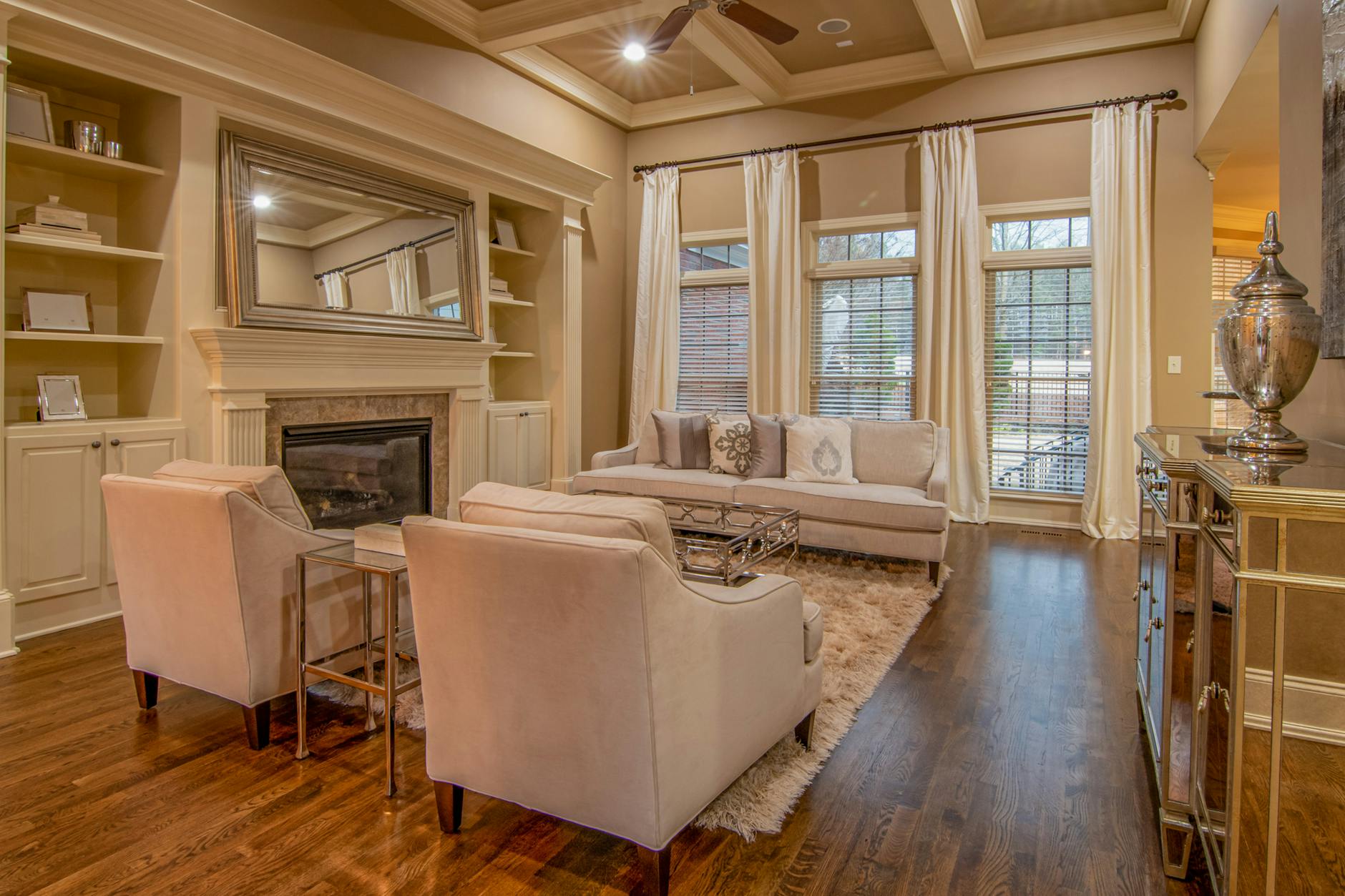
A living room feels cozier when you improve three things before buying any new decor: the lighting, the seating arrangement, and the textiles you touch. Warm lamps at several heights, furniture pulled into a conversational group, and two or three soft layers on the sofa will do more than another shelf of objects.
Clutter and coziness often get confused. A cozy room feels gathered and settled, which means everything has a reason to be there. That is why the best changes tend to be subtractions and swaps. The steps below are in order of impact per dollar.
Fix the lighting first
Overhead light alone flattens a living room. Cozy rooms usually have three to five light sources at different heights, none of them harsh.
- Bulb color: Use bulbs labeled 2700K or lower in every lamp. Cooler bulbs in the 4000K to 5000K range make a living room feel clinical.
- Brightness: Table lamps in a living room typically work well with 450 to 800 lumens each. Floor lamps behind seating can go a bit brighter, and you can use a dimmer to lower them at night.
- Heights: Mix a floor lamp near the sofa, a table lamp on a side table or console, and a small accent light on a shelf or the mantel. Light at different heights makes the room look deeper.
- Shades: Fabric shades in cream or linen diffuse light softly. Dark or opaque shades push light up and down and can look moody but dim.
- Overhead fixtures: If you must use them, put them on a dimmer. Installing a wall dimmer is electrical work, and a licensed electrician should handle it unless you have the training and know how to isolate the circuit.
If you want more depth on lamp choice and layering, see the guide to lighting that makes a home feel warm at night.
Arrange furniture for conversation, not for the walls
A living room that has every piece pushed against the wall often feels like a waiting room. Pull seating inward so people can talk and the room has a center.
A few measurements help:
- Leave about 14 to 18 inches between the sofa and coffee table so you can reach a mug without leaning.
- Keep roughly 30 to 36 inches for main walkways.
- Keep seats within about 8 feet of each other for easy conversation.
- If the room allows it, float the sofa a few inches to a foot off the wall, or angle a chair toward it.
Group furniture on a rug so the pieces read as one zone. Place a side table within arm’s reach of every seat, because a spot to set a drink is a basic comfort. If a TV dominates the room, consider arranging seating so it is not the only focal point, and use a console or low shelf with a lamp beside it so the screen does not sit in a dark gap.
Choose a rug that anchors the seating
A rug is one of the biggest comfort and warmth upgrades. A rug that is too small makes the room look disconnected. In many layouts, the front legs of the sofa and chairs should sit on the rug. In a typical living room, 8 by 10 feet is a common size, and 9 by 12 for larger spaces. A 5 by 8 rug usually floats too small except in tight rooms.
Wool is durable and soft. Low-pile and flatweave rugs are easier to vacuum, while a medium pile feels better underfoot. Add a rug pad, usually $25 to $80, to stop slipping and add cushion. Rugs in common sizes are one of the bigger purchases here, and secondhand shops and remnant dealers can bring the cost down.
Layer textiles you actually touch
Softness is the most direct route to cozy. Pick a few high-contact surfaces and make them better, rather than scattering small items.
- Sofa throw: One generous throw folded over an arm or the back, in a chunky knit, wool blend, or a soft cotton.
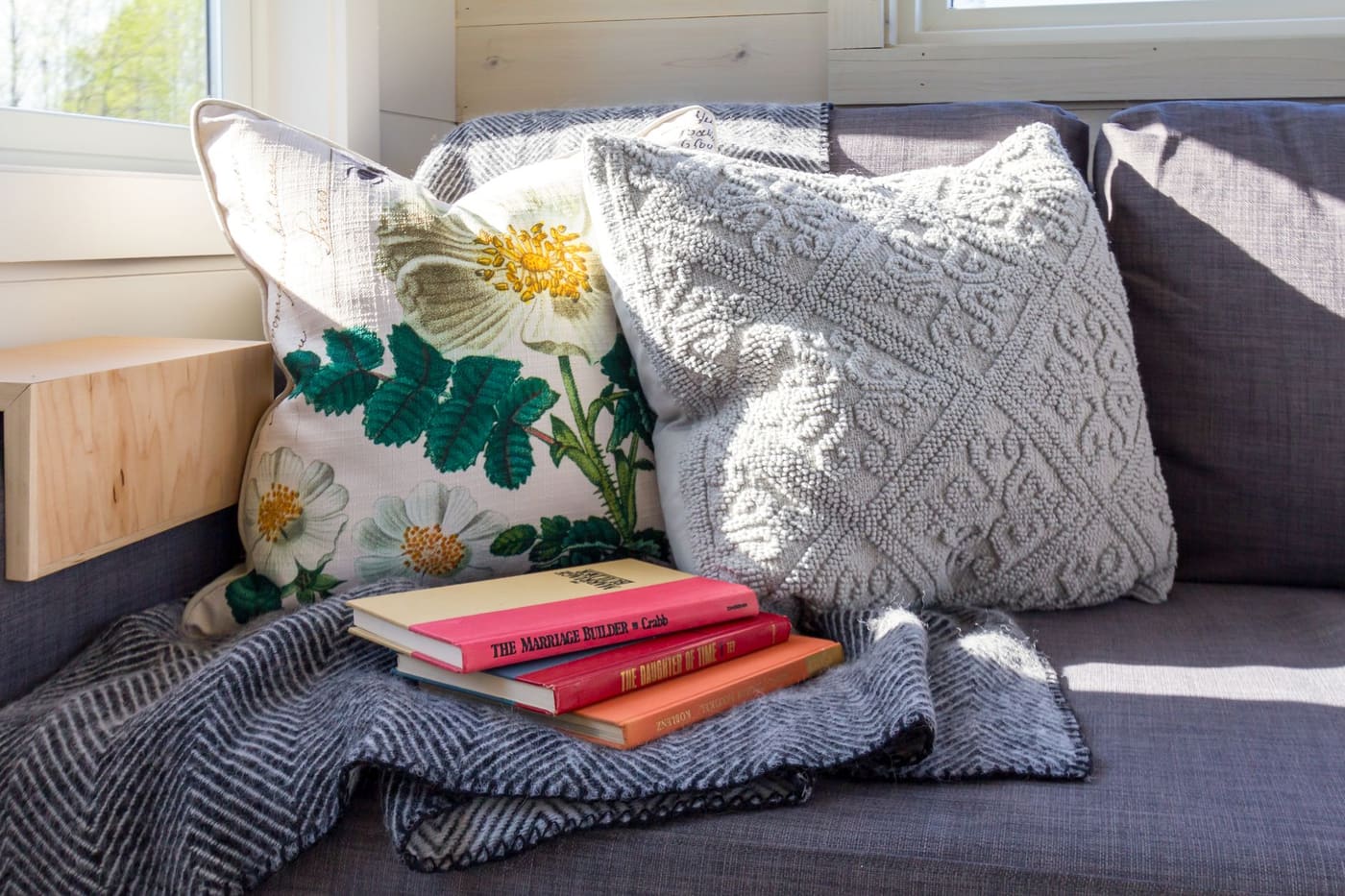
- Pillows: Two to four pillows per sofa, mixing sizes (20 inches, 22 inches, and a lumbar) and varying textures such as linen, bouclé, and cotton velvet. Odd or uneven numbers look more natural.
- Chair upholstery or cushions: An accent chair with a slipcover or seat cushion adds softness.
- Curtains: Floor-length panels hung high and wide soften windows and add height. Linen, cotton, or a heavier weave in a warm neutral work well.
For ways to combine materials without making the room look heavy, read the guide to textures that make a home feel cozier.
Use a warm, limited color palette
Cozy living rooms usually stick to a few colors with warm undertones. You can build on what you already have by adding one or two textiles that share a hue.
Try neutral bases like warm white, oatmeal, greige, or soft taupe, then add depth with clay, olive, rust, or deep blue in small doses. A single bold color in one or two items looks intentional. Five different bold colors looks scattered.
If your walls are a stark white or cool gray, you do not have to repaint right away. Warm lamp light and warm textiles can offset them. When you do repaint, test large samples and look at them morning and night. For more, see the guide to colors that make a home feel warmer without being dark. If your home was built before 1978, the EPA advises against dry sanding or scraping old paint, which may contain lead.
Edit surfaces so the room feels settled
The coziest living rooms are not bare. They have personal things. They also have clear surfaces. A few editing rules keep it from tipping into clutter.
- Group by threes: On a shelf or console, cluster three items of different heights, such as a small plant, a stack of books, and a lamp or vase.
- Leave empty space: A shelf that is about two-thirds filled looks styled. A full shelf looks stuffed.
- Contain the daily stuff: Remotes, charging cables, and mail need a tray or lidded basket.
- Choose a few large items over many small ones: One big piece of art beats six tiny frames scattered around.
- Limit the coffee table: A tray, a book, a plant, and a candle is enough.
Take a photo of the room and look at it on your phone. Anything that looks messy in the photo usually needs a home or a removal.
Add warmth you can feel, not just see
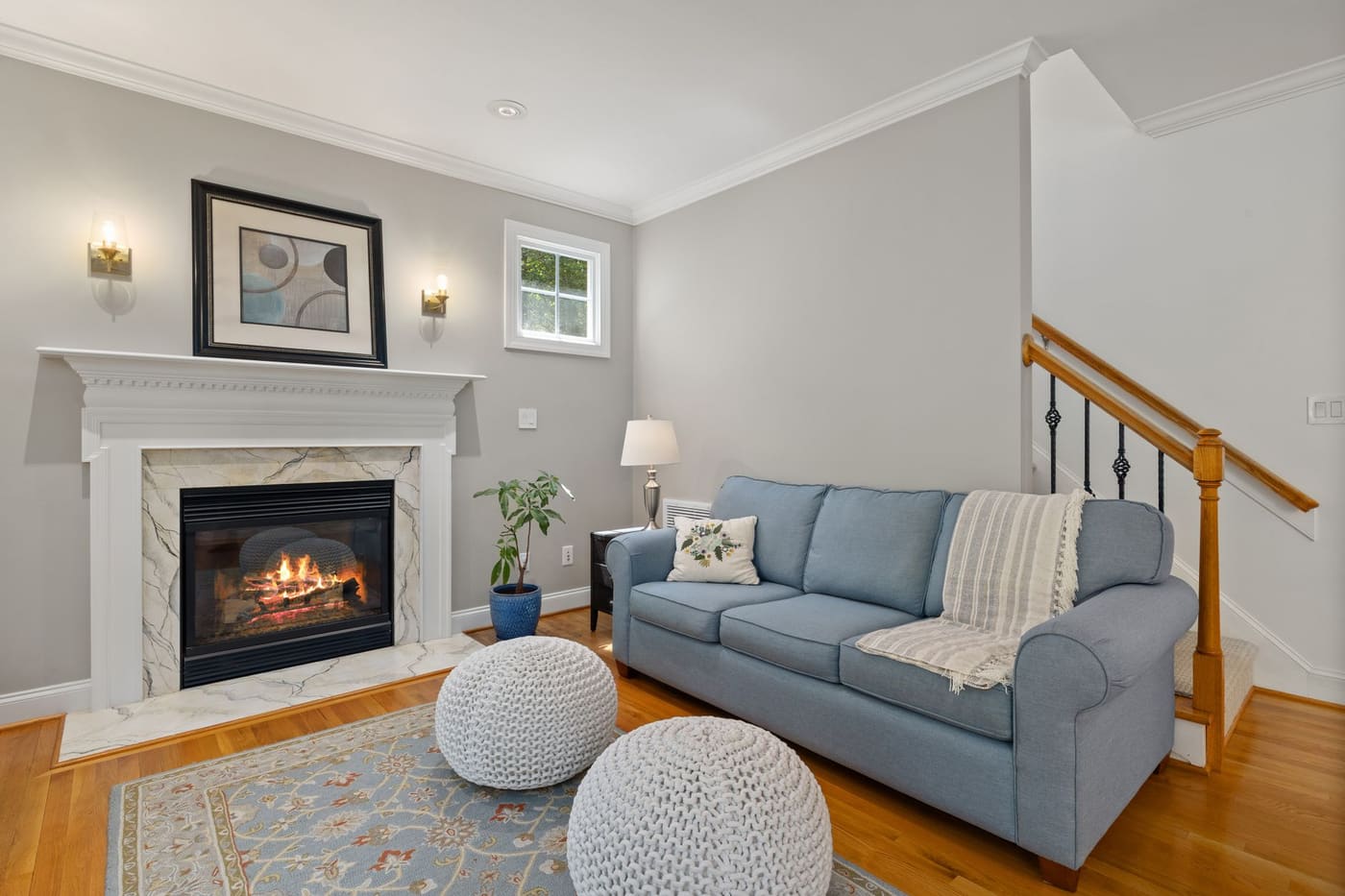
A few non-visual cues affect how cozy a room feels. A draft near the sofa makes it hard to relax, so check windows and doors. Weatherstripping is usually an inexpensive hardware store fix. A snug throw and warm lamp can help, but a draft is better solved at the source.
Scent works lightly. A simmer pot, a candle, or a diffuser adds a gentle cue. Keep candles in stable holders, away from curtains and throws, and never leave them unattended. If you have a fireplace, have the chimney inspected by a certified professional before using it, and keep a screen in front of it. Candles belong at least 12 inches from anything that can burn, per the National Fire Protection Association. A wood stove or gas fireplace should be serviced only by a qualified technician. Do not use any fuel-burning appliance without a working carbon monoxide alarm nearby.
What to buy first
| Priority | Item | Typical cost |
|---|---|---|
| 1 | Warm bulbs and one extra lamp | $20 to $120 |
| 2 | Throw and pillow covers | $50 to $150 |
| 3 | Rug in the right size | $200 to $800 |
| 4 | Curtains hung high and wide | $80 to $300 |
| 5 | Side tables and tray | $40 to $200 |
If a room still feels flat after these, the guide on why a room still does not feel cozy even after you decorate it walks through the less obvious causes, like scale and cold contrast.
Where this comes from
This guide rests on common interior-design rules of thumb for layout, rug size and lighting, plus the National Fire Protection Association’s candle safety advice and the EPA’s lead-safe guidance for homes built before 1978 (as summarized by state health departments). Distances and sizes are guidelines, not tested results. Prices and product specifications change, so check them at the source or the store.