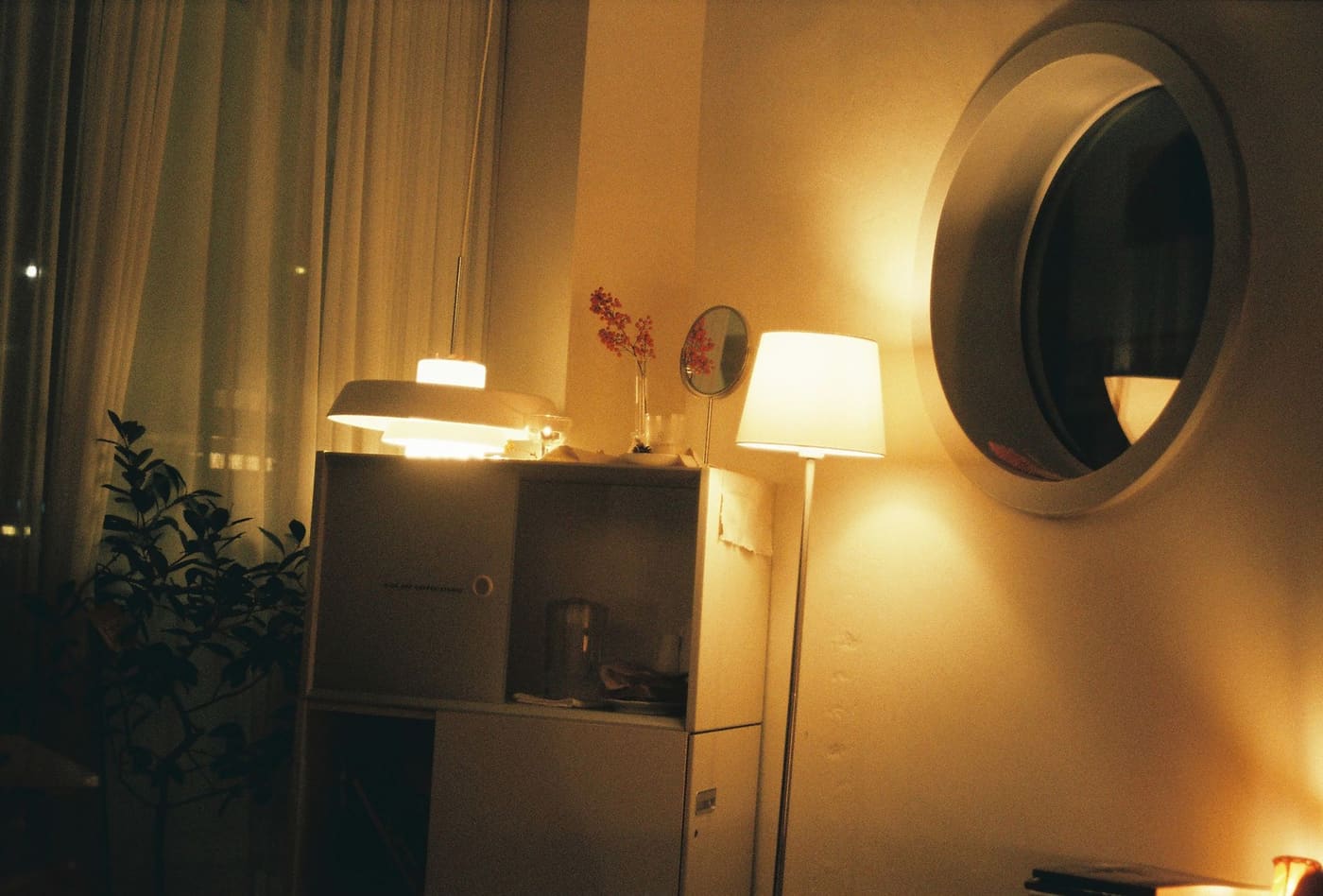
The lighting that makes a home feel warm at night is low, layered, and yellow-toned: several lamps at different heights using bulbs rated 2700K or lower, dimmed or kept to modest brightness, with the harsh overhead light turned off. Think of it as pools of glow around seating and surfaces instead of one bright source flooding the whole room.
Most homes feel cold after dark for three reasons: bulbs are too blue, the light comes from a single ceiling fixture, and everything is too bright. Fixing those costs less than most decor purchases, and a few bulbs and lamps can change the room in an evening.
Choose the right color temperature
Color temperature is measured in kelvin (K). Lower numbers are warmer and more yellow, higher numbers are cooler and bluer.
| Kelvin | Common label | Look | Best use |
|---|---|---|---|
| 2200K to 2400K | Extra warm, amber | Candle-like glow | Accent lamps, dining, lounge spots |
| 2700K | Warm white | Classic incandescent glow | Living rooms, bedrooms, most lamps |
| 3000K | Soft white | Slightly crisper warm | Kitchens, bathrooms, hallways |
| 4000K | Cool white | Neutral to bluish | Task spaces, garages |
| 5000K and up | Daylight | Blue-white | Workshops, not cozy rooms |
For a cozy evening, 2700K is a dependable default, and amber 2200K bulbs work in a few accent lamps if you want a deeper glow. Avoid mixing a 2700K lamp next to a 5000K bulb in the same room, since the contrast looks patchy. Buy all bulbs for a room from the same color temperature when possible, and check the label on the box, because “soft white” can mean different numbers across brands.
Pay attention to brightness in lumens
Watts used to tell you how bright a bulb was. LED bulbs use less power, so lumens are the number to read now. As a rough guide, a traditional 60-watt bulb produced about 800 lumens.
- Table lamps in living rooms or bedrooms: about 400 to 800 lumens each.
- Bedside reading lamps: about 400 to 600 lumens.
- Floor lamps with an uplight: about 800 to 1,200 lumens, ideally dimmable.
- Accent lamps on shelves or consoles: about 100 to 300 lumens.
Cozy rooms rely on moderate brightness. If a lamp looks glaring even with a warm bulb, switch to a lower lumen bulb or add a dimmer. Many people end up with the right color but too much light, which still reads as clinical.
Also check the color rendering index (CRI), printed on many bulb packages. A higher CRI makes skin, wood, and fabrics look more natural, and many designers look for 90 or above. A low CRI can make warm tones look dull.
Build light in three layers
Designers often describe three layers. You do not need all of them in every room, but the mix is what creates depth.
- Ambient: The general light that fills the room softly, such as a floor lamp bouncing light off a wall or a dimmed ceiling fixture.
- Task: Light for reading, cooking, or working, such as a bedside lamp or an adjustable desk lamp.
- Accent: Small lights that add shape and interest, such as a picture light, a shelf lamp, or a small table lamp on a console.
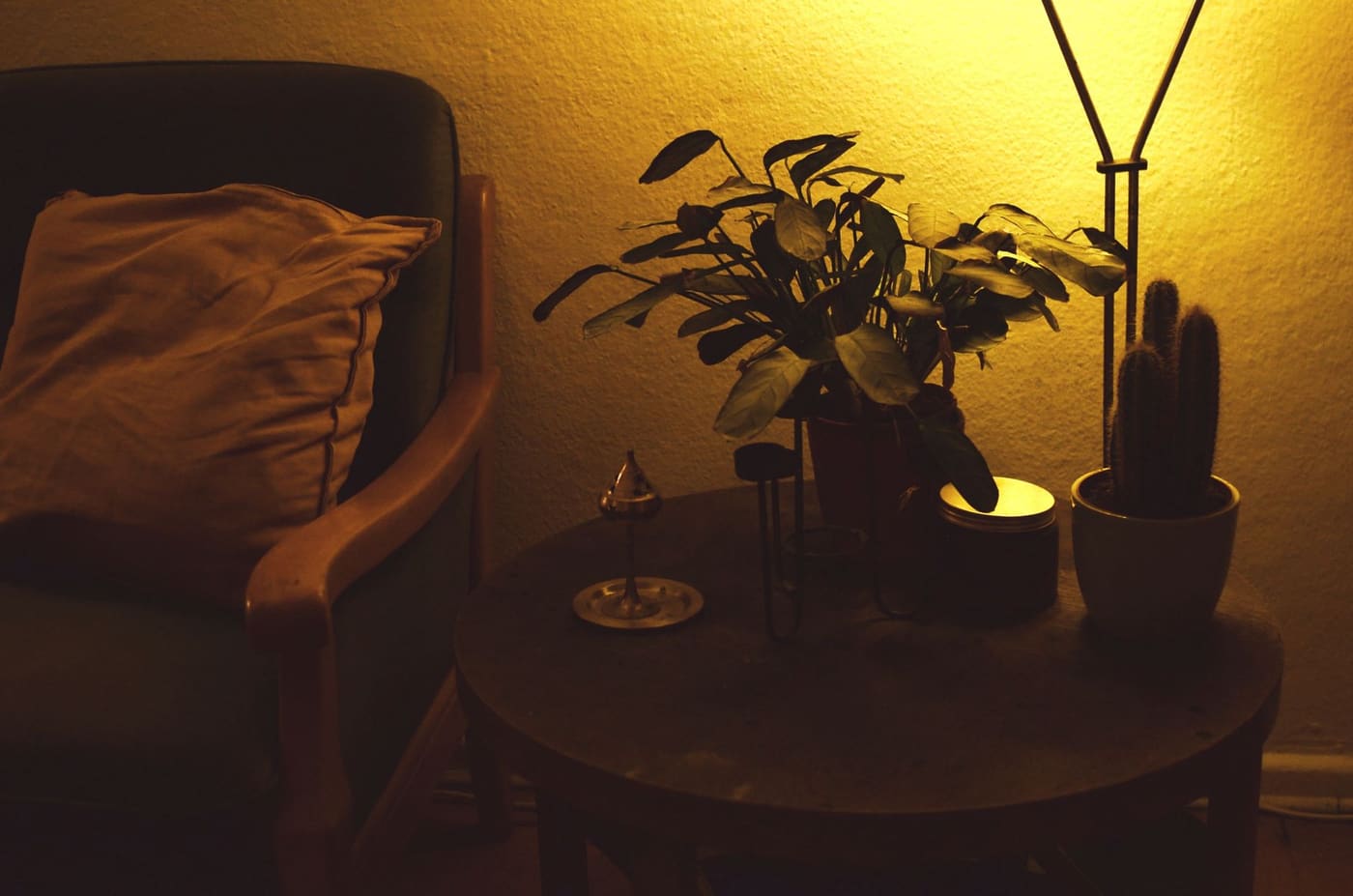
A living room might have a floor lamp beside the sofa for ambient and reading, a table lamp on a side table, and a small accent lamp on a bookshelf. Aim for at least three sources in each main room, spread across different corners, so no wall looks dark and no spot looks harsh. A starting rule is one lamp for each seating area plus one at eye level near the room’s perimeter.
Place lamps at the right height and spacing
Placement matters as much as the bulb. A lamp in the wrong spot can produce glare or dark corners.
- Shade height: For a lamp next to seating, the bottom of the shade should sit roughly at eye level when you sit, which stops the bulb from being visible and glaring.
- Corners: Put a lamp in a dark corner and aim light up the wall. This extends how big the room feels and removes dark wedges.
- Side tables: Pair a table lamp with a surface that is 22 to 26 inches high, and avoid placing a tall lamp on a tall table because it will crowd your head.
- Cords: Run cords along baseboards or behind furniture. Do not run cords under rugs or across doorways, since this can damage insulation and create a fire or trip hazard.
- Wall washing: A lamp placed a foot or two from a wall creates a soft gradient that makes the room look warm.
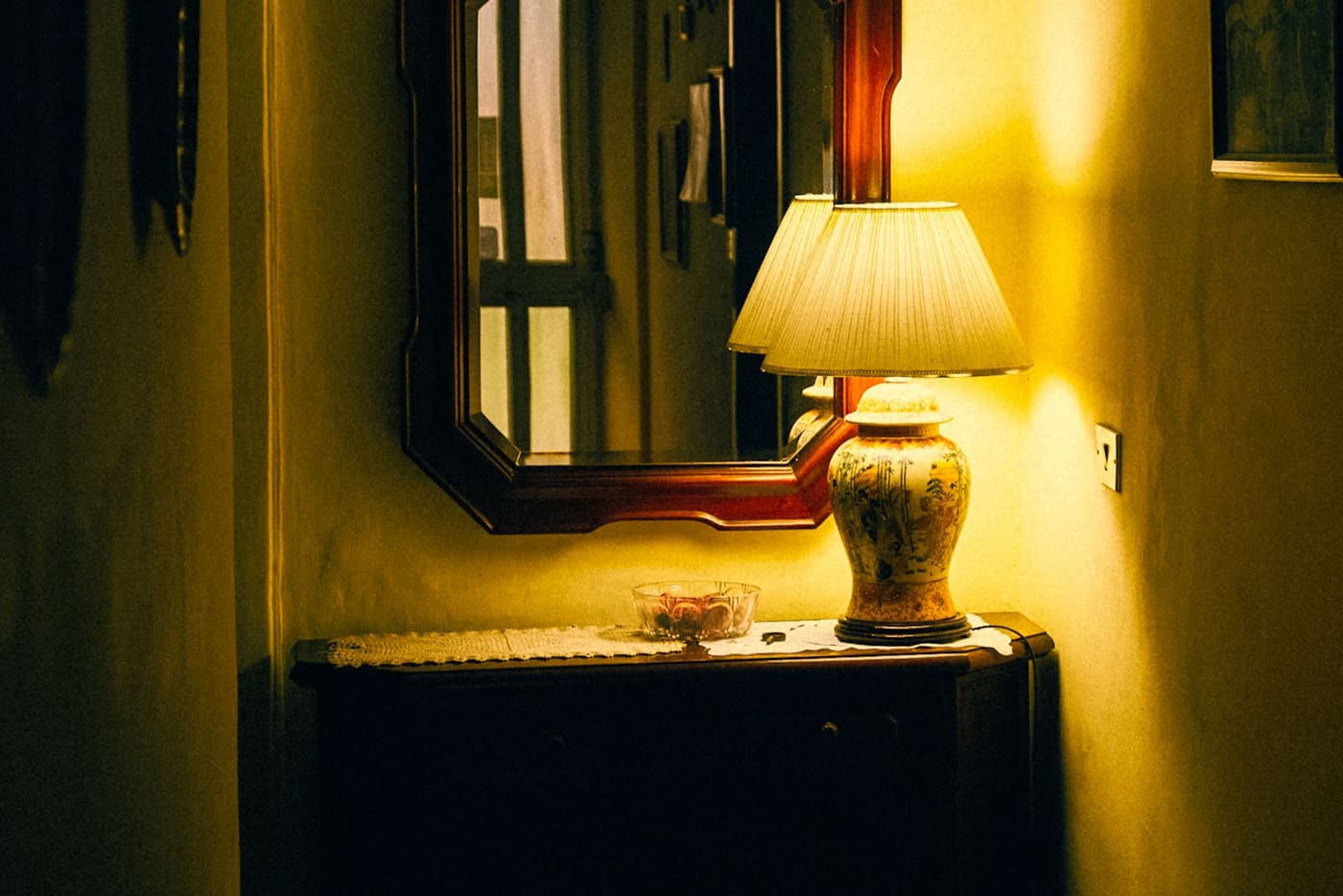
Lighting also changes how furniture reads. A guide on why a room still does not feel cozy even after you decorate it covers cases where the lamp is fine but the scale or layout is the problem.
Use dimmers and smart bulbs to control mood
The ability to lower brightness is often what separates a cozy room from a bright one. There are three easy ways to get it:
- Lamps with built-in dimmers: Many have a touch or turn control. These are the simplest for renters.
- Plug-in dimmers: A small inline unit that sits between lamp and outlet. Check that it is rated for LED loads.
- Smart bulbs: Dimmable bulbs controlled by an app or voice, many with an adjustable warm range. They cost more than basic bulbs but are easy to fit in an existing lamp.
Installing a new wall dimmer replaces the existing switch, which means working inside an electrical box. Turn the circuit off at the breaker and verify with a tester only if you are trained; otherwise hire a licensed electrician. Make sure the dimmer and bulbs are compatible, or the bulbs may flicker, buzz, or not dim fully. Never exceed a lamp’s maximum wattage rating on its label.
Add candlelight and low accent glow safely
Candles are a big part of the warm night look. A real flame is warmer than most bulbs, at roughly 1,800K, but you can get close with amber filament bulbs and flameless candles.
For real candles:
- Keep them on a stable, heat-resistant surface and away from curtains, paper, and plants.
- Keep them at least 12 inches from anything that can burn, as the National Fire Protection Association advises, and away from drafts.
- Blow them out when you leave the room or go to bed.
- Trim wicks to about 1/4 inch before lighting.
- Keep them out of reach of children and pets.
Battery-powered flickering candles, small lanterns, and string lights give a similar glow with less risk. Use LED string lights in glass jars, on shelves, or draped over a mantel, and avoid overloading outlets or power strips. For outdoor spaces, use outdoor-rated products only.
Avoid the common mistakes
Some habits quietly work against a warm look.
- Relying on the overhead light: It lights everything evenly and casts downward shadows. Keep it for cleaning.
- Mixing color temperatures: One cool bulb in a row of warm ones breaks the effect.
- Bare bulbs: Exposed bulbs create glare. Use shades, or frosted or diffused bulbs.
- Too few lamps: A single lamp in a big room leaves dark zones.
- Lamps too small for the room: A tiny lamp on a wide console looks lost.
- Dark shades with no brightness: A deep-colored opaque shade can cut too much light. Cream or linen shades glow.
Light also interacts with paint. Very yellow walls plus 2200K bulbs can look orange. If you are choosing paint to go with your lighting, the guide to colors that make a home feel warmer without being dark helps with that pairing, and the textures that make a home feel cozier article explains how fabric and wood respond to lamp light.
A budget plan to warm up a room tonight
If you only have a small amount to spend, this order works:
- Replace every bulb in your main lamps with 2700K LEDs of 400 to 800 lumens. Typically $10 to $30 for a room.
- Turn off the overhead light for the evening.
- Move one lamp into a dark corner or add one inexpensive table lamp. Often $25 to $80.
- Add a plug-in dimmer or smart bulbs where you need adjustment.
- Add flameless candles or a small amber accent lamp.
That setup is a modest spend and can change a room a lot.
To work out how much light a room needs, use the cozy lighting layers planner and cozy lighting buying guide.
Where this comes from
This guide draws on the National Fire Protection Association’s candle safety advice and common lighting-design practice: kelvin for color temperature, lumens for brightness, and layered ambient, task and accent light. The statement that a 60-watt incandescent bulb is roughly an 800-lumen bulb matches how replacement LED bulbs are labeled. Lumen ranges per lamp are rules of thumb. Prices and product specifications change, so check the package label and the store.